How Long Invisalign Takes: The Short Answer
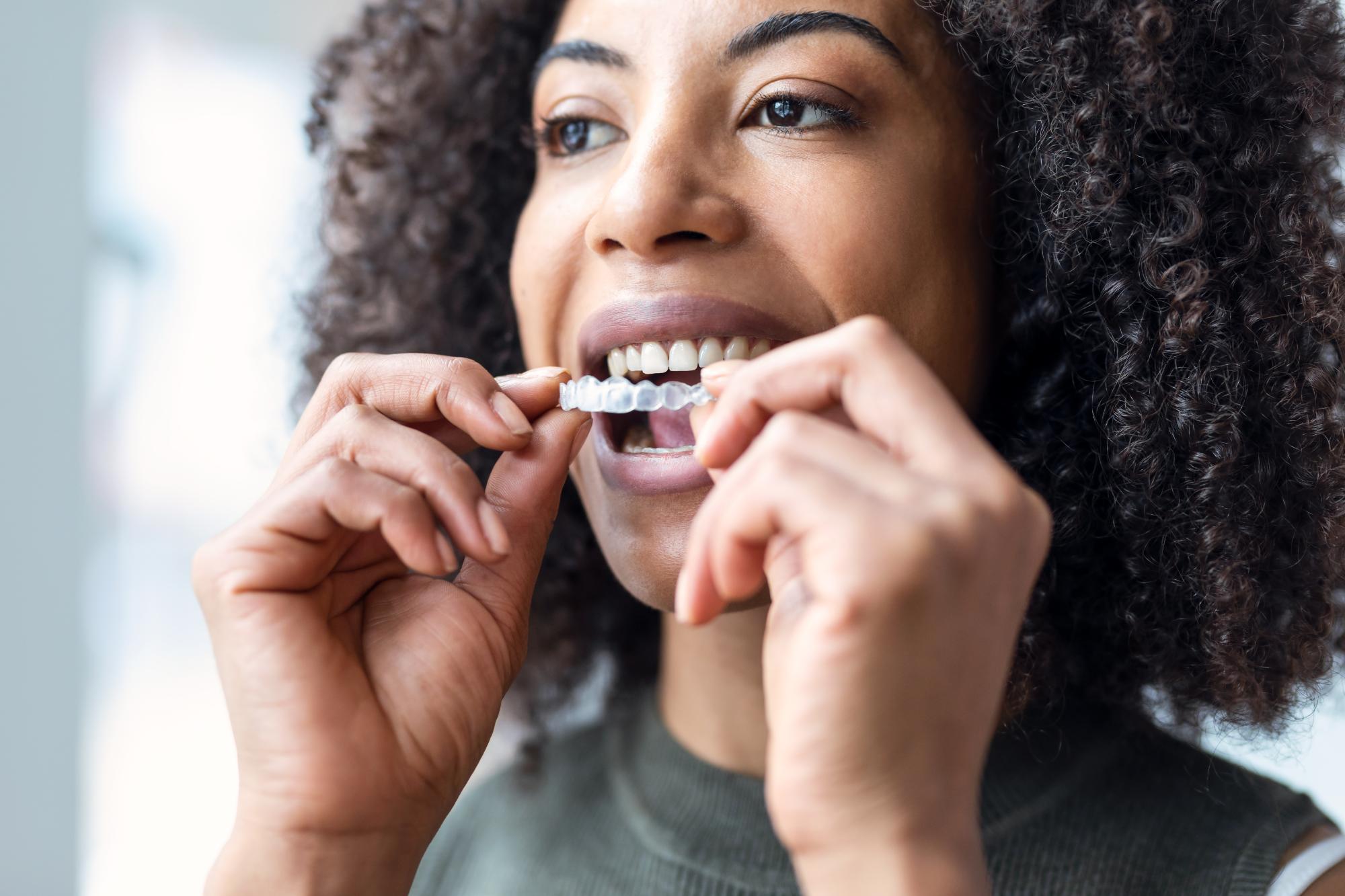
Invisalign typically takes 12 to 18 months for most patients, though mild crowding or spacing can be corrected in as little as 6 to 10 months. Complex malocclusion often requires 18 to 24 months or longer. Aligners are usually changed every 7 to 14 days, and wearing them 20 to 22 hours daily keeps treatment on schedule.
So how long does Invisalign take in your specific case? That answer comes from your teeth, not an average. A patient closing a small gap between two front teeth and a patient correcting a deep bite are working on completely different problems, and the number of aligner trays in each plan reflects that.
Here’s what shapes the estimate you’ll receive:
- Your starting alignment. Mild rotations and small spaces move quickly. Bite correction takes longer because teeth and jaw relationships both have to change.
- Your wear time. Aligners only work while they’re in your mouth. This is the single biggest factor patients actually control.
- Your treatment plan. The original series may be followed by refinement trays to detail the final result.
At Sunflower Orthodontics, your first step is a complimentary orthodontic exam and consultation with digital scanning. Those scans let Dr. Jae Brimhall map projected tooth movement and give you a realistic timeline before you commit to anything. Patients of all ages from Mansfield and surrounding communities begin exactly the same way, with a scan and a straightforward conversation rather than a rough guess.
How the Invisalign Timeline Works, Month by Month
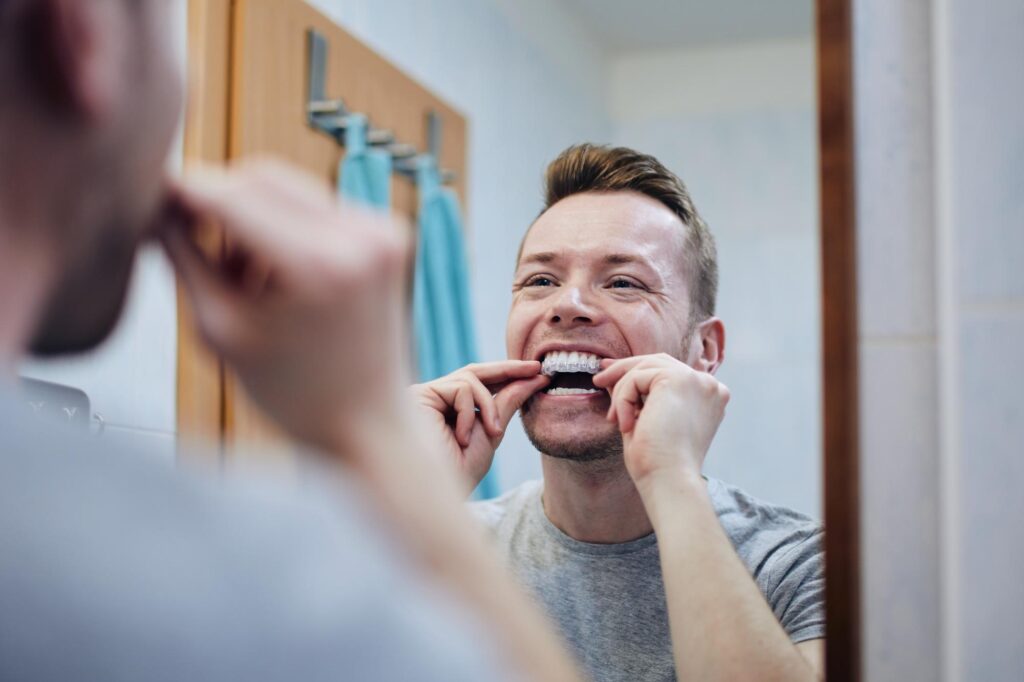
Treatment moves through predictable stages, and patients of all ages tend to feel more settled once they know what happens when. Understanding the sequence makes the whole timeline easier to plan around, whether you’re a high school sophomore or an adult in Mansfield who has waited twenty years for the smile of your dreams.
Month 0: Consultation and digital scan. We take a 3D scan of your teeth, review your bite, and build a treatment simulation that shows how your teeth are expected to move. You’ll see a projected end result and an estimated number of trays before your first aligner is ever made.
Month 1: First aligners and attachments. Small tooth-colored attachments are bonded to certain teeth to give the aligners something to grip. Expect a few days of adjustment. Speech feels slightly different at first, and most patients adapt within a week.
Months 2 to 3: First visible changes. Crowded teeth often begin to spread and settle into better positions during this stage. Many patients notice a difference in the mirror around this point, which tends to be excellent motivation for staying disciplined with wear time.
Months 4 to 6: Progress checks and adjustments. We evaluate whether your teeth are tracking with the digital plan. Some cases call for interproximal reduction, a conservative reshaping of enamel between teeth to create room for alignment. If a tooth is lagging behind, we address it now rather than at the end.
Final months: Detailing and refinement. The last stretch focuses on bite refinement and small finishing movements. A second series of aligners, called refinements, is common and completely normal. It means we’re perfecting the result instead of settling for close enough.
After active treatment: Retainers. Teeth shift throughout life. According to the American Association of Orthodontists, retainer wear is what protects your alignment long term, and we’ll give you a specific schedule to follow.
Why Is Invisalign Faster Than Braces?
Invisalign often finishes faster because every movement is planned digitally before the first tray is manufactured, and there are no brackets or wires to break along the way. Steady tray changes every 7 to 14 days keep teeth moving in small, predictable increments, which also reduces the unscheduled repair visits that tend to stretch traditional treatment out.
Clear aligner treatment often finishes sooner than braces for all ages in suitable cases, and the reasons are pretty practical:
- Movement is planned before it happens. Your entire sequence is mapped digitally, so each tray is manufactured to deliver one specific increment of movement.
- Fewer interruptions. There are no brackets to pop loose or wires to poke, which means fewer unscheduled visits that push your timeline back.
- Steady, incremental force. Changing trays every 7 to 14 days applies consistent light pressure instead of larger corrections spaced weeks apart.
- Easier hygiene. You remove your aligners to brush and floss normally. Healthy gums and cavity-free teeth keep treatment moving; inflammation and decay stall it.
- Short progress checks. Many aligner visits are brief, and some cases are well suited to remote monitoring between in-person appointments.
One honest caveat: none of these advantages matter if the trays sit in their case. Braces work whether you think about them or not. Aligners require you to show up for your own treatment every single day.
Invisalign vs. Braces: Treatment Time Compared
Invisalign averages 12 to 18 months, while traditional braces commonly run 18 to 24 months. The gap narrows or disappears with complex cases. Severe rotations, impacted teeth, and significant skeletal discrepancies are often corrected more efficiently with braces, since fixed appliances deliver continuous force without depending on patient compliance. If you are still weighing the two side by side, we cover how to choose between braces and clear aligners in more detail separately.
| Invisalign / Clear Aligners | Braces for All Ages | |
|---|---|---|
| Average duration | 12 to 18 months | 18 to 24 months |
| Visit frequency | Roughly every 8 to 12 weeks | Roughly every 4 to 8 weeks |
| Adjustments | New tray every 7 to 14 days at home | Wire changes at the practice |
| Best suited for | Mild to moderate crowding, spacing, minor relapse | Severe rotations, impacted teeth, larger bite corrections |
| Compliance factor | Requires 20 to 22 hours of daily wear | Works around the clock automatically |
| Unscheduled visits | Uncommon | Occasional loose bracket or wire |
Some patients get the best of both. A hybrid plan might use braces on the lower arch to handle stubborn rotations while clear aligners work the upper arch, or begin with brackets for heavy lifting and finish with aligners. Dr. Jae will tell you honestly which option gets you to the finish line faster, even when that answer isn’t the one you were hoping for. That candid approach is something families across Mansfield and surrounding communities have come to expect from Sunflower Orthodontics.
Factors That Affect Your Invisalign Timeline
Your Invisalign timeline is determined by six main factors: case complexity, daily wear compliance, your age and bone response, the number of trays prescribed, whether refinement aligners are needed, and how consistently you attend progress visits. Of these, wear time is the one you fully control and the one that most often extends treatment.
1. Case complexity. Mild crowding and small gaps resolve quickly. Correcting an overbite, underbite, crossbite, or open bite asks more of the appliance and adds months to the plan.
2. Daily wear. Missed hours accumulate. Skipping a few hours here and there for weeks on end can add months, because teeth begin drifting back before the next tray is ready to do its work.
3. Age and bone response. Teens are still growing, and their bone often remodels a bit more readily than an adult’s, which is part of why clear aligner treatment for teenagers tends to move on its own schedule. Adults absolutely get incredible results, but the biology moves at its own pace. A meaningful share of the patients we see are adults, so an adult timeline is a routine part of how we plan rather than an unusual request.
4. Number of trays in your plan. Your original series is calculated from your scan. More trays means more weeks, plain and simple.
5. Refinement aligners. Teeth don’t always track exactly as predicted. A refinement series adds time and delivers a better final result. Most patients consider that trade worthwhile.
6. Visit attendance and instructions. Following your tray change schedule, using chewies as directed, and keeping your scheduled visits all protect the original estimate.
Who Gets the Fastest Results With Invisalign?
The shortest treatment times belong to patients with mild to moderate concerns and strong daily habits. If your teeth are fully erupted, your gums are healthy, and you can genuinely commit to 20 to 22 hours of wear, you’re set up for an efficient result.
Strong candidates for faster treatment include:
- Adults and teens with mild to moderate crowding who need modest space creation
- Patients with generalized spacing or a single noticeable gap
- Anyone experiencing minor relapse after previous orthodontic treatment, especially if retainers were abandoned years ago
- Disciplined wearers who build tray changes into a consistent routine
Cases that typically need more time involve significant skeletal correction, impacted or unerupted teeth, or bites that require additional appliances alongside aligners. That doesn’t rule out clear aligners. It simply means the plan looks different and the calendar stretches a bit.
The only reliable way to know your number is a free consultation with digital scanning. There’s no obligation, no pressure, and you’ll leave with a realistic estimate rather than a guess. Dr. Jae Brimhall is a board-certified orthodontist, and that training shapes how carefully each timeline is mapped at Sunflower Orthodontics. We are your neighbors and your friends, and patients of all ages from Mansfield and surrounding communities are always welcome to see their digital treatment simulation before deciding anything at all.
Frequently Asked Questions About Invisalign Treatment Time
Can Invisalign be done in 6 months?
Yes, but only for very mild cases. Minor crowding of the front teeth or a small gap can sometimes be corrected in 6 to 10 months. Most patients fall in the 12 to 18 month range, and any provider promising a six-month result before scanning your teeth is guessing.
How often do I change my aligners?
Most patients change trays every 7 to 14 days, depending on the schedule Dr. Jae sets for your case. Some plans allow a faster change interval; others require the full two weeks so teeth can settle. Changing early on your own initiative usually causes trays to fit poorly and slows everything down.
What happens if I don’t wear my aligners enough?
Treatment slows and teeth stop tracking with the digital plan. When that happens, aligners feel tight or won’t seat fully, and additional refinement trays become necessary to get back on course. A pattern of short wear days can add several months to your total time.
How soon will I see results?
Many patients notice visible changes within the first two to three months, particularly with front-tooth crowding. Early progress is often the most dramatic stretch of treatment, even though the finishing work takes considerably longer.
Do I have to wear retainers after Invisalign?
Yes, and you should plan on wearing them indefinitely. Teeth naturally shift with age regardless of how they were straightened. Nightly retainer wear is a small habit that protects everything you invested in your show-stopping smile.
Is Invisalign faster than braces?
Often, yes, particularly for mild to moderate cases. Braces may be the quicker route for severe rotations, impacted teeth, or substantial bite correction. If you’re not sure which option fits your situation, our team at Sunflower Orthodontics in Mansfield will take a close look and give you honest, expert guidance.